There are no items in your cart
Add More
Add More
| Item Details | Price | ||
|---|---|---|---|

-Nikitha Andhranatyam
“Andhranatyam is not just a dance — it is the heartbeat of Telugu temples, carrying centuries of devotion, art, and identity.” — Nikitha Andhranatyam
What is Andhranatyam? The Forgotten Classical Dance of the Telugu People
A Dance Rooted in the Land of Trilingadēśa
Before we dive into the story of Andhranatyam, let’s pause and look at where it comes from.
The Telugu-speaking region — today’s Andhra Pradesh and Telangana — was once known as Trilingadēśa, or “the land of the three lingas.” This name refers to three sacred Shiva temples that marked the spiritual boundaries of the region:
· Kaleshwaram in Telangana
· Srisailam in Rayalaseema
· Draksharamam (Bhimeswaram) in Coastal Andhra
These temples were not just centers of worship — they were cultural hubs where dance, music, poetry, and devotion flourished together. Out of this sacred geography grew Andhranatyam, a dance form deeply tied to the identity of the Telugu people. Unlike many stage-centered classical forms we know today, Andhranatyam was originally a temple tradition, a living expression of spirituality and community.
Sacred Origins & Temple Connection
For more than 2,000 years, Andhranatyam was performed in Buddhist Aramas, temples, and royal courts. It was primarily carried forward by women, not as a hobby or performance art, but as a sacred responsibility.
Every movement, every expression carried meaning — telling stories of gods, goddesses, and cosmic cycles of creation and dissolution. The dance was a form of ritual offering as much as it was an art.
The Decline: Colonial Misunderstandings and Social Stigma
One of the most painful chapters in Andhranatyam’s history came during the colonial period.
For centuries, temple dancers (often known as devadasis) were respected ritual artists. They lived in temples, contributed to music and literature, and preserved Agama-based traditions of dance and worship.
But British colonial rule, shaped by Victorian morality, misunderstood and misrepresented these women. The devadasi system was wrongly equated with immorality, and eventually, the Madras Devadasis (Prevention of Dedication) Act of 1947 was passed.
While this law was intended as reform, its consequences were devastating:
· The sacred link between the art and the temple was broken.
· Devadasis lost their livelihood, dignity, and social position.
· Temple and royal patronage collapsed.
· Oral traditions and training lineages disintegrated.
Other forms like Bharatanatyam and Kuchipudi adapted to new contexts and survived, but Andhranatyam was left behind, nearly erased from public memory.
Revival Movement: The Vision of Dr. Nataraja Ramakrishna
Hope returned in the late 1960s through one remarkable individual: Dr. Nataraja Ramakrishna.
He traveled across Andhra Pradesh to Draksharamam, Simhachalam, Penugonda, and beyond not to perform, but to listen and search. In these journeys, he met elderly women who had once been temple dancers but had been silenced by stigma and neglect.
With respect and empathy, he encouraged them to share their memories. Slowly, they demonstrated forgotten rituals and dances like Kumbha Harathi, Kaisiki Nrityam, and temple processional offerings.
The seeds of revival were planted here in whispers, memories, and temple spaces, not in books or institutions.
Milestones in the Revival:
· 1970: At the Abhinaya Sadassu in Rajahmundry, 31 elderly temple dancers came together, and for the first time, the name Andhranatyam was formally given to this art form.
· 1973: First training workshop in Hyderabad.
· 1974: A structured syllabus was created.
· 1982: Syllabus refined by senior gurus.
· 1990s: Seminars spread awareness.
· 1995: Introduced into the Andhra Pradesh university curriculum.
· 2002: Potti Sreeramulu Telugu University launched Andhranatyam at the postgraduate level.
Through these steps, the art form found a fragile but significant rebirth.
Andhranatyam in Modern Urban Culture
Today, Andhranatyam is alive — but still vulnerable.
· Awareness is low — many confuse it with Bharatanatyam, Kuchipudi, or Perini.
· Teaching styles vary, leading to inconsistency.
· The practitioner community is small, mostly concentrated around Potti Sreeramulu Telugu University.
· Documentation is limited, and its digital presence remains weak.
· Government and institutional support is inconsistent, leaving practitioners to struggle.
Andhranatyam has made its way into urban culture through seminars, performances, and university programs, but much remains to be done to secure its rightful place.
My Journey with Andhranatyam
When I began my training over 11 years ago, I too had the question: “What is Andhranatyam?” Often, the responses I received were confusion or curiosity.
There were times I wanted to give up — the lack of visibility and opportunities made it difficult. But the depth, beauty, and sacredness of the art kept pulling me back.
Today, I see my journey as part of a larger mission: to bring Andhranatyam into wider awareness, to restore dignity and visibility to this timeless tradition.
The Future of Andhranatyam
Andhranatyam is not just a relic of the past — it is a living tradition. With dedicated academies, digital platforms, and creative collaborations, there is immense potential for it to grow in today’s world.
To young dancers, my message is simple:
Explore it. Learn it. Perform it.
When you step into Andhranatyam, you don’t just learn a dance — you become part of a movement that reclaims history, celebrates identity, and carries forward a heritage nearly lost to time.
✨ Andhranatyam is the story of resilience — of women, of tradition, and of a culture finding its voice again
Follow this space as I continue sharing more about Andhranatyam and its journey
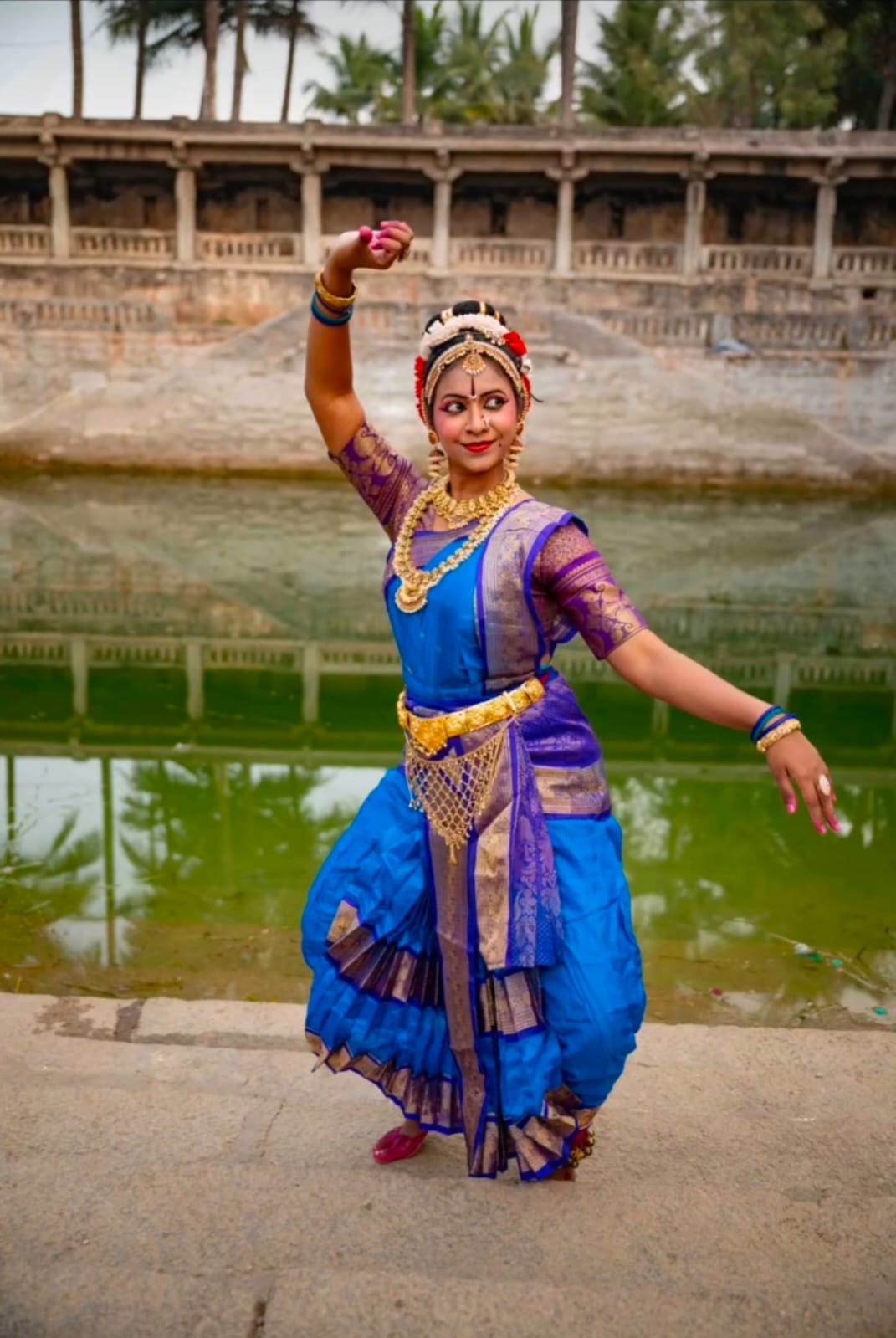
Nikitha Andhranatyam
A Hyderabad-based dance researcher, storyteller, and Advocate of the classical temple art form Andhranatyam.
 Launch your Graphy